By onlyinterviews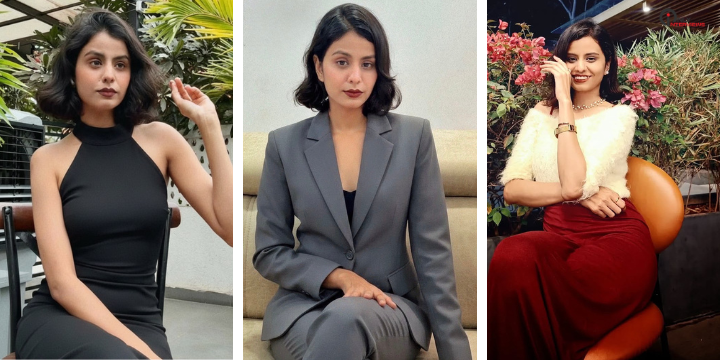
The Journey of Growth, Grit, and Reinvention
A candid conversation with Drasti Chauhan on personal evolution, STEM leadership, burnout, and the courage to build a life on your own terms.
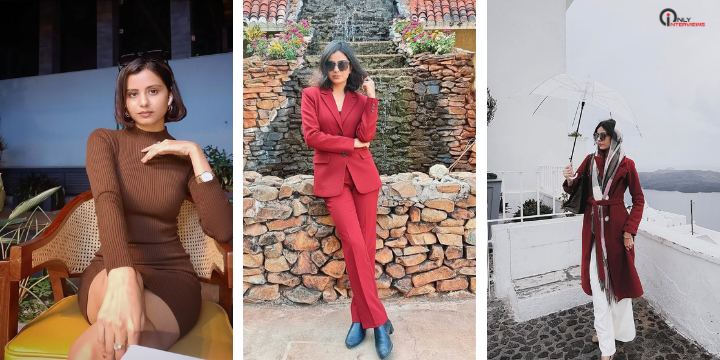
Drasti Chauhan is a career and brand positioning strategist, entrepreneur, published author, and content creator who has built her life across Kutch, Canada, Bangalore, and Hyderabad. From semiconductor engineer to founder, from blogger to MC, Drasti has never fit neatly into one box — and she has no plans to start. In this candid conversation, she talks about reinvention, the unglamorous side of ambition, and the version of herself she is still becoming.
Roots & Becoming
OI: Growing up in Kutch, moving to Canada at the age of 5, and then building your life across Bangalore and Hyderabad — that’s not one displacement, that’s multiple. Looking back, how did all of that distance from your roots actually shape the woman you became?
DC: Moving to Canada at 5 with a PR meant I was uprooted before I even had a full sense of who I was or where I belonged. I didn’t have the language for it then, but looking back, that early experience of being between cultures, identities was the first time I learned to build a sense of self that didn’t depend on place. Coming back to India, growing up in Kutch, and then moving independently across cities like Bangalore and Hyderabad only deepened that muscle.
Each move stripped away another layer of external comfort and forced me to figure out what was actually mine to keep. I moved from being a traditional homebody to a wildflower — beautiful, fierce and free. The groundedness I carry isn’t rooted in geography anymore. It’s something I built from the inside, across every city and country that tried to define me before I could define myself.
OI: You’ve always been someone who refused to be just one thing. But at what point did you stop explaining yourself to people who couldn’t understand why an engineer was also a blogger, also an author, also an MC — and just start owning it fully?
DC: Honestly, I’ve never felt the need to explain my multidimensionality to people who couldn’t hold the full picture. Even as a kid, I was comfortable standing alone without needing someone else to validate what I knew about myself. What shifted wasn’t me — it was my willingness to let others sit with their confusion without making it my responsibility. When you’re an engineer who also models, who MC’d events before she even had a LinkedIn profile, who wrote a book at 12, people will always try to find the one box that fits. I stopped waiting for that box to exist and started building my own shelf.
“Rest isn’t recovery anymore — it’s strategy.”
OI: There’s always a version of yourself you were afraid of becoming. Did you ever come close to losing that core identity in the chaos of juggling so many things at once — and what pulled you back?
DC: There have been phases — especially during the transition out of my engineering career — where I could feel myself fragmenting. The pressure of leaving something stable, the uncertainty of what I was building, the noise of other people’s timelines. I came close to shrinking, to choosing safety over alignment. What pulled me back was something very simple: every version of myself that I’ve lost sleep over has eventually led to a version I’m proud of. Life can either break you or shape you. It depends on how you choose to see it. I choose to see every setback as data, not defeat. No matter the phase, I’ve held on to that core part of me that stays curious, resilient, and grounded.

The Hustle & the Hard Lessons
OI: You’ve been in the creator space long enough to have seen it go from blogs to reels to AI-generated everything. As someone who built from scratch before all the shortcuts existed — what do you think is fundamentally broken about influencer culture today?
DC: What’s broken is the overemphasis on visibility over value. It’s become easier to look credible than to actually build credibility. A lot of content today is engineered for attention, optimised for a three-second hook rather than a lasting idea. That creates short-term growth with very little long-term trust. I say this especially in the context of the STEM and professional space, where the people consuming this content are highly analytical — they can sense hollow content quickly. The real gap today isn’t reach. It’s substance. And substance takes time, lived experience, and the willingness to say things that don’t trend.
“The real gap today isn’t reach. It’s substance. And substance takes time, lived experience, and the willingness to say things that don’t trend.”
OI: The financial side of content creation is rarely spoken about honestly. Without getting into numbers — how long did it take you to stop undercharging, and what was the moment you finally decided your work was worth more than what people were offering?
DC: I’ve been intentional about not underpricing my work because I’ve always been clear on the value I bring. Early on, that meant saying no more often than saying yes — to collaborations that didn’t align, to rates that didn’t reflect the depth of what I was offering. For me, it wasn’t one defining moment. It was a mindset I built early: if the alignment or the valuation isn’t right, I’d rather walk away than dilute my work. Undercharging is often less about money and more about self-perception — and that’s something I’ve never been willing to negotiate.
“Undercharging is often less about money and more about self-perception — and that’s something I’ve never been willing to negotiate.”
OI: A lot of creators talk about discipline, but very few talk honestly about burnout. What does burnout actually look like for Drasti — and what did it force you to change about the way you live and work?
DC: For me, burnout doesn’t look like stopping. It looks like continuing without clarity or energy — showing up consistently but feeling completely disconnected from what you’re doing. There have been phases where I was producing content, taking calls, running the brand, and internally I felt hollow. That kind of burnout is harder to catch because from the outside, everything looks fine. What it forced me to change was becoming ruthless about where my energy actually goes — not just what I say yes to, but how I work and why. Rest isn’t recovery anymore — it’s strategy.
“Burnout, for me, doesn’t look like stopping. It looks like continuing without clarity or energy — showing up consistently but feeling completely disconnected from what you’re doing.”
OI: Most people who achieve early recognition carry a quiet pressure to keep topping themselves. Do you feel that weight — and how do you separate genuine ambition from the anxiety of constantly living up to your own story?
DC: There is definitely a certain pressure that comes with being seen early — you set a bar and then you feel like every next move has to clear it. With time, I’m learning to separate external momentum from internal direction. Ambition for me now is about building something meaningful at my own pace, not constantly performing growth just to prove to the world that I can keep up with myself. The shift happened when I started measuring progress by depth rather than frequency.
The Crossroads
OI: A lot of multi-talented people eventually hit a hard crossroads — go deep on one thing or keep expanding. Have you hit that point yet? How did you sit with that decision — and do you feel at peace with the path you chose?
DC: I think I hit that crossroads very early. I was a published author at 12, a Times of India -recognised public speaker at 18, a model and content creator around the same time, then went on to work as a teacher and later as a hardware engineer in the semiconductor industry. I left that stable job at almost 30, which by every conventional standard seemed like a questionable decision. Today, I’m an entrepreneur working with STEM professionals, leaders, founders, and businesses as a Career and Brand Positioning Strategist. And I do not see this as a limitation. I go deep where it matters, but I don’t box myself into one identity. Every pivot I’ve made — from engineering to entrepreneurship — has been a conscious decision to expand, not escape. I’m at peace with it because it’s built on clarity, not confusion.
OI: You once said you’d never make content creation your full-time profession because of its financial unpredictability. Has life tested that conviction since — and where do you stand on it today?
DC: I used to see content creation as financially unpredictable, so I avoided it full time. But over time, I started understanding the actual business architecture behind it — the difference between being a content creator and running a content-powered business. Once I saw that distinction clearly, the decision to shift became straightforward. It wasn’t forced by circumstance. It was calculated. And I stand by it.
OI: You dreamed of starting your own lipstick brand — born purely out of obsession. Has that idea ever moved from thought to ground, or has entrepreneurship pulled you in a completely different direction?
DC: That idea didn’t materialise, but looking back, it was an early signal — the pull toward building something of my own. What evolved from it is far more aligned with who I actually am. Today I run a content business and work as a Career and Brand Positioning Strategist, specifically in the STEM space. Over time, I realised I want to be known for my thinking and the impact of my work, not just for having a certain look or aesthetic. That realisation was quiet, but it was decisive. It shaped everything that came after.
OI: You worked hard to build a career as a hardware engineer in the semiconductor industry, especially post-graduating during COVID. Why walk away from something so stable and hard earned?
DC: Exactly because it was hard earned, I didn’t take the decision lightly. That role gave me a strong technical foundation, and graduating during COVID made that stability feel even more precious. But over time, I realised that while I could continue growing within it, it wasn’t where I could create the kind of impact or ownership I was looking for. Leaving wasn’t about rejecting stability — it was about recognising that I had outgrown the version of myself who had worked so hard for it, and choosing a direction that was more honest about where I was evolving.
The Work & the Why
OI: You work specifically with STEM professionals — a community that tends to be deeply sceptical of ‘personal branding’ as a concept. How do you break through that resistance and help them see it differently?
DC: That scepticism is completely valid — and honestly, I think it’s an asset. STEM professionals are trained to distrust vague claims and demand evidence. So when I work with them, I don’t sell them on ‘building a brand’. I show them what being invisible is actively costing them. The promotions going to someone less qualified but more visible. The opportunities passing to people who simply communicate their value better. Engineers understand systems, so I reframe personal branding as a communication system, not a performance. Once they see it that way, the resistance drops fast.
“I don’t sell STEM professionals on ‘building a brand’. I show them what being invisible is actively costing them.”
OI: You’ve built much of your thought leadership on LinkedIn. What’s one thing you see professionals consistently getting wrong about the platform?
DC: Treating it like a résumé instead of a conversation. Most people post their achievements and wait for the world to respond. But LinkedIn rewards perspective, not credentials. The people who grow fastest aren’t necessarily the most accomplished — they’re the ones willing to share a specific point of view on a specific problem their audience is experiencing. Authority on LinkedIn isn’t claimed through your title. It’s built through consistently showing up with a perspective that helps someone think differently.
The Voice & the Mission
OI: There’s a big difference between being known and being heard. Beyond personal brand, beyond follower counts — what cause or conversation do you most want to be a voice for right now?
DC: I want my work to eventually support something larger than just myself. I plan to build initiatives focused on women and animal welfare. For me, success isn’t just personal growth — it is being able to create resources and opportunities that extend beyond me.
“Success isn’t just personal growth — it is being able to create resources and opportunities that extend beyond me.”
OI: You wrote your first book at 12. At this age, with everything you’ve lived through — failure, reinvention, ambition, loss — what story is sitting inside you that only now you have the life experience to actually tell?
DC: At 12, I wrote from imagination. Today, I would write from experience. The story I’d want to tell now is about reinvention — what it really looks like to outgrow versions of yourself, to walk away from things that once defined you, and to still trust your path even when it doesn’t make sense to anyone else. It wouldn’t be a perfect story, but it would be honest. About ambition, doubt, starting over, and choosing yourself anyway. I think that story is still being written.

The Person Behind It All
OI: Relationships, friendships, love — these things quietly reshape us more than any career milestone ever could. How has your understanding of people and deep connections evolved as you’ve moved through your late 20s?
DC: My understanding of people has become both simpler and more complex. Simpler in that I’ve stopped trying to hold on to connections that were meant to be temporary. More complex in that I’ve come to understand how deeply the people we love shape our blind spots. I’ve come to see people as seasons — they come and they go, and that’s not failure, that’s just life. The only constant is yourself. So the most important relationship I’ve invested in, especially through my late 20s, is the one I have with who I’m becoming.
OI: Someone out there right now is watching your journey and quietly gathering the courage to start. What is the one brutal truth about this life you wish someone had told you before you began — not inspiration, but the real, unglamorous thing?
DC: There will be phases where things won’t go your way — even when you’re doing everything right, even when you’re consistent, clear, and genuinely good at what you do. The unglamorous truth is that fairness is not a feature of this journey. What matters is whether you keep building anyway. Not every day with fire — some days, just showing up is enough. The people who make it aren’t always the most talented. They’re the ones who didn’t stop when it stopped feeling worth it.
“The unglamorous truth is that fairness is not a feature of this journey. The people who make it aren’t always the most talented — they’re the ones who didn’t stop when it stopped feeling worth it.”

The Final Mirror
OI: If you could sit across from the younger version of yourself — not to give advice, just to have one honest conversation — what do you think she would say to you that you’re not quite ready to hear?
DC: I think she’d ask me why I’m still rushing. Why I feel the need to have everything figured out right now — why I keep measuring myself against timelines that were never mine to begin with. She was more fearless in some ways, less tangled up in outcomes, less concerned with what the story looked like from the outside. I don’t think I’m fully ready to admit that slowing down and trusting the process might actually take me further than the pace I’m keeping right now. But I’m starting to hear her.
“I keep measuring myself against timelines that were never mine to begin with.”
Also Read Story of –
Sashi Kanth Visinigiri Cocofit Founder: Pioneering a Coconut-Powered Wellness Revolution